

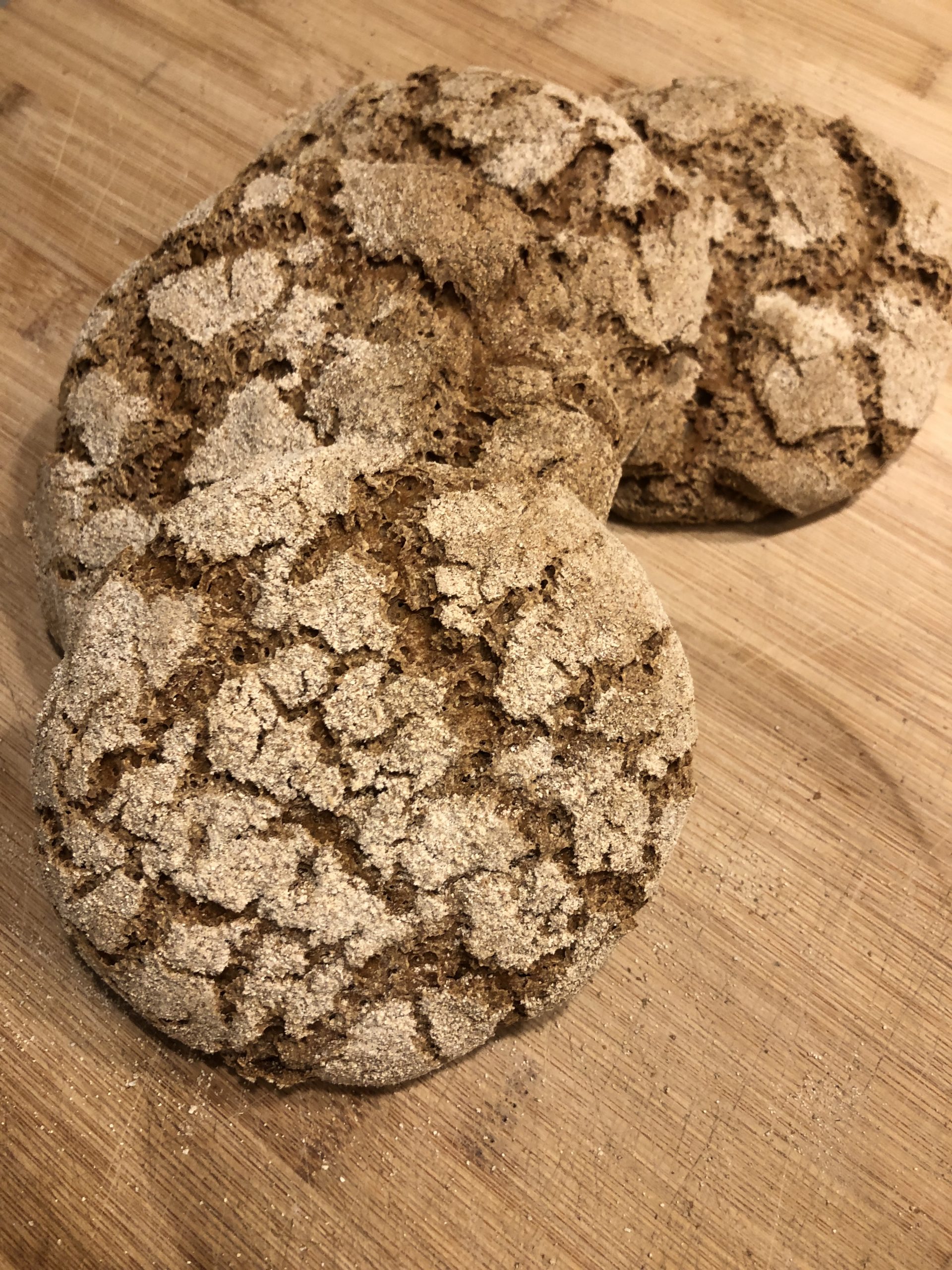
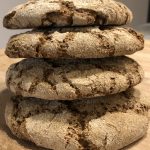
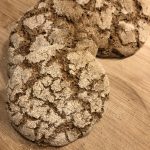
There are breads that tell the story of the place they come from with the very first bite. Rye Puccia is one of them. Typical of the Dolomites and nearby South Tyrol, this small rustic loaf has been part of everyday mountain life for generations. Made with rye flour and sourdough starter, it is known for its thick, crisp crust, dense crumb, and the unmistakable aroma of caraway seeds (kummel) and fennel seeds, spices that have flavored Alpine rye breads for centuries. Rye is one of the oldest cereals cultivated by humankind. Thanks to its remarkable resistance to cold climates, it found the perfect home in the Alpine valleys, eventually becoming the signature grain of mountain cuisine. Even today, Rye Puccia is traditionally enjoyed with speck, cured meats, mountain cheeses, hearty soups, and rich regional dishes, but it is equally delicious simply spread with a little butter. For this recipe we’ll use a well-fed, mature sourdough starter and prepare the dough entirely by hand. Don’t expect an elastic dough like white bread: rye contains very little gluten, so the dough will naturally be denser and slightly sticky. That’s exactly how it should be. The dough is shaped into small round loaves and baked directly on a baking stone. During baking, the surface naturally cracks, giving each Puccia its unique appearance, while the crust becomes beautifully crisp and protects a fragrant, flavorful crumb.
Equipment
-
- Baking stone
- Large mixing bowl
- Dough scraper
- Clean kitchen towel
Ingredients for Refreshing the Sourdough Starter
-
- 200 g sourdough starter, refreshed 12 hours earlier
- 200 g sifted whole rye flour
- 200 ml water at 38–40°C (100–104°F)
How to Refresh the Sourdough Starter
Refresh your starter using a 1:1:1 ratio:
-
- 1 part sourdough starter
- 1 part water
- 1 part flour
Dissolve the starter in the water, add the flour, and mix vigorously until smooth and creamy. Cover with a clean kitchen towel and let it mature at room temperature for about 4 hours.
Ingredients (Makes 4 loaves of about 400 g each or 8 smaller ones)
-
- 400 g whole rye flour
- 200 g Type 1 wheat flour (or bread flour)
- 400 ml water at 38–40°C (100–104°F)
- 16 g salt
- 600 g mature sourdough starter
- 1 teaspoon caraway (kummel)
- 1 teaspoon fennel seeds
Method
Mixing the Dough
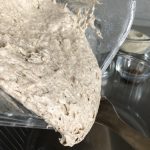
Place all the sourdough starter, the warm water, and finally both flours into a large bowl. Add the salt, the caraway, and the fennel seeds. Begin mixing with your fingers using small circular movements to hydrate all the flour. Then fold the dough from the outside toward the center while rotating the bowl. Don’t try to obtain a perfectly smooth dough. Because rye contains very little gluten, the dough will naturally be dense, moist, and slightly sticky. This is completely normal. Mix for only a few minutes.
Shaping
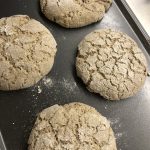
Generously flour your work surface with rye flour. Turn out the dough and divide it into four equal pieces (or eight if you prefer smaller Puccia loaves). Gently shape each piece into a round loaf by tucking the edges underneath without overworking the dough. Coat each loaf with rye flour and place them well apart on a floured baker’s peel or on a sheet of parchment paper. Cover with a clean kitchen towel. Leave to proof at about 30°C (86°F) for 1 hour and 30 minutes. By the end of the proofing time, the loaves will have increased in size and the characteristic cracks typical of Rye Puccia will begin to appear on the surface.
Baking
Thirty minutes before the end of the proofing time, preheat the oven to 230°C (445°F) with the baking stone already inside. Once both the oven and the baking stone are thoroughly hot, carefully slide the loaves directly onto the baking stone. Do not use steam. Bake for 25–30 minutes, until the crust is deeply golden. To check whether the bread is fully baked, tap the bottom of a loaf. It should sound hollow. Allow the loaves to cool completely on a wire rack. You’ll be rewarded with beautifully crisp loaves featuring a dense crumb, small, even air pockets, and the distinctive aroma of rye, caraway, and fennel. I recommend slicing it or simply cutting it into four pieces and serving them with butter, speck, cured meats, mountain cheeses, or simply toasted.
Adocchio Tips
- Use the spices with restraint. Caraway and fennel should enhance the flavor of the rye, never overpower it.
- Don’t be afraid of the cracks. They are the hallmark of a well-made Rye Puccia. The more naturally the crust opens, the more rustic and authentic the bread will be.
- Wait before slicing. Let the loaves cool completely. Like many rye breads, their aroma and flavor become even richer the following day.
If you enjoy rye breads, be sure to try my Sourdough Rye Bread Baked in a Loaf Pan. Made with the same dough but baked in a loaf pan, it develops a more regular shape and is perfect for breakfast or for serving alongside cured meats, cheeses, and soups. You can find the full recipe here