

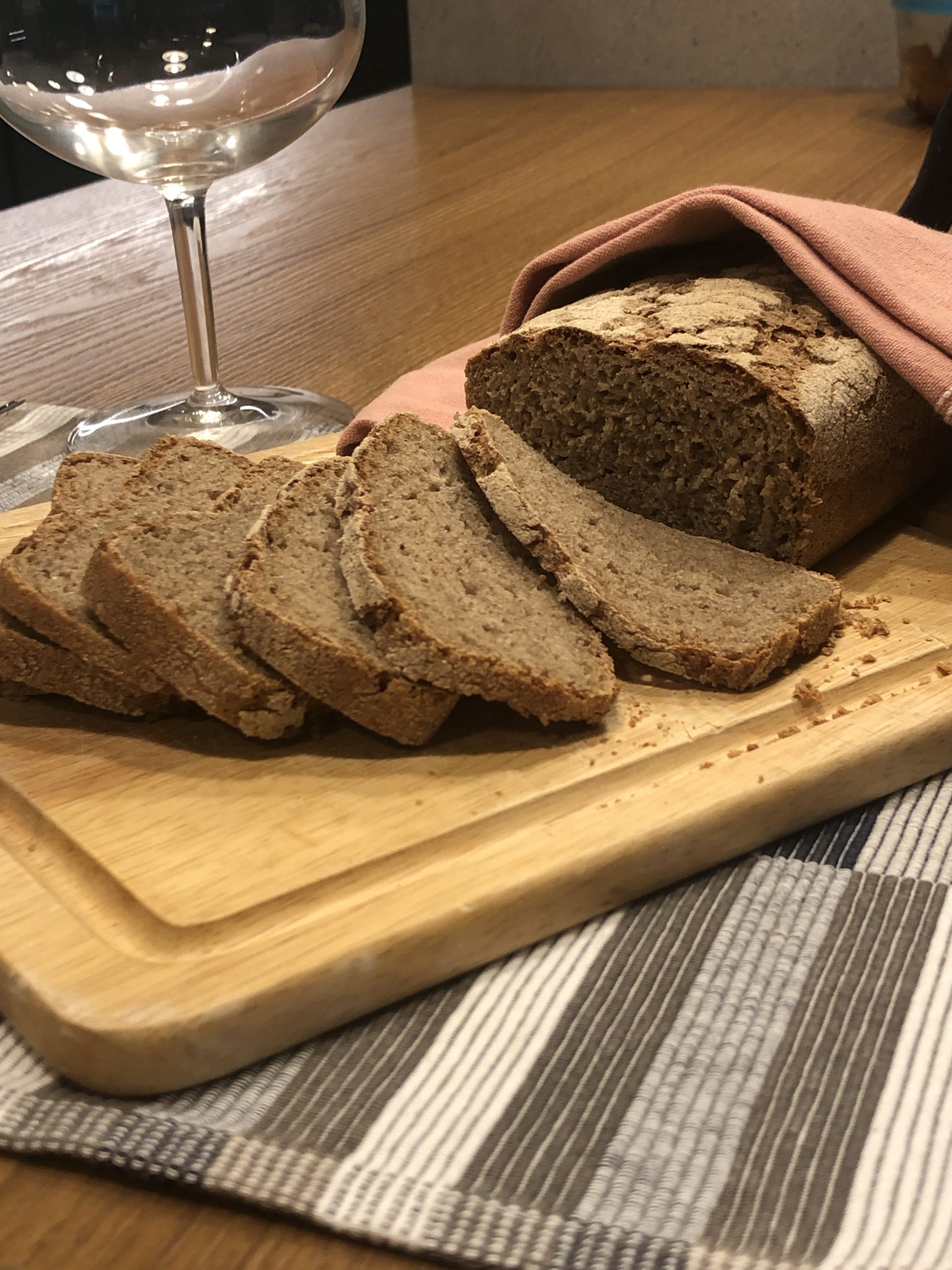
In a Loaf Pan
There are certain aromas that instantly bring you home. For me, it’s the unmistakable scent of freshly baked rye bread.
I grew up in Cortina d’Ampezzo, and like in many valleys of the Dolomites and nearby South Tyrol, rye bread was always on the table. With its intense aroma, rustic flavor, and dense texture, it pairs beautifully with cured meats, cheeses, soups, and traditional mountain dishes. Rye is one of the oldest cereals cultivated by humankind. It is believed to have originated in Asia Minor, where it grew wild more than 3,000 years ago, before spreading throughout Northern Europe thanks to its remarkable resistance to cold climates. Even today, rye bread is considered a staple throughout many Nordic countries and remains widely enjoyed in the Italian Alps. Try it with a medium-aged cheese, a hearty goulash, a slow-cooked beef stew, or simply toasted alongside a steaming bowl of soup on a cold winter day. At breakfast, it’s delicious spread with butter and a thin layer of jam. Making it at home is much easier than you might think. For this recipe we’ll use a well-fed, active sourdough starter and prepare the dough entirely by hand. Don’t expect an elastic dough like white bread: rye contains very little gluten, so the dough will naturally be denser and stickier. That’s exactly how it should be. The bread is baked in two loaf pans placed directly on a baking stone, allowing it to rise evenly while developing a wonderfully crisp crust.
Equipment
-
- Baking stone
- 2 loaf pans (28 × 15 × 8 cm / 11 × 6 × 3 in)
- Large mixing bowl
- Dough scraper
- Clean kitchen towel
Ingredients for Refreshing the Sourdough Starter
-
- 200 g sourdough starter, refreshed 12 hours earlier
- 200 g sifted whole rye flour
- 200 ml water at 38-40°C (100-104°F)
How to Refresh the Sourdough Starter
Refresh your starter using a 1:1:1 ratio:
-
- 1 part sourdough starter
- 1 part water
- 1 part flour
Dissolve the starter in the water, add the flour, and mix vigorously until smooth and creamy. Cover with a clean kitchen towel and let it mature at room temperature for about 4 hours.
Ingredients (Makes 2 loaves of about 800 g each)
-
- 400 g whole rye flour
- 200 g Type 1 wheat flour (or bread flour)
- 400 ml water at 38-40°C (100-104°F)
- 16 g salt
- 600 g mature sourdough starter
Method
Mixing the Dough
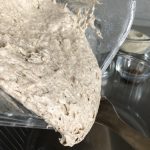
Place all the sourdough starter, the warm water, and finally both flours into a large bowl. Begin mixing with your fingers using small circular movements to hydrate all the flour. Then fold the dough from the outside toward the center while rotating the bowl. Don’t try to obtain a perfectly smooth dough. Because rye contains very little gluten, the dough will naturally be dense, moist, and slightly sticky. This is completely normal. Mix for only a few minutes.
Shaping
Generously flour your work surface with rye flour. Turn out the dough and divide it into two equal portions. Gently flatten each piece and roll it onto itself without overworking it. Coat each loaf with rye flour and place it into the well-floured loaf pans. Cover with a clean kitchen towel. Leave to proof at about 30°C (86°F) for 1 hour and 30 minutes.
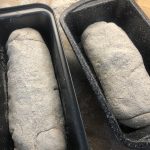
By the end of the proofing time, the loaves will have increased in volume and the surface will show the characteristic cracks typical of rye bread.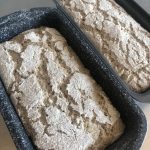
Baking
Thirty minutes before the end of the proofing time, preheat the oven to 230°C (445°F) with the baking stone already inside. Once both the oven and the baking stone are thoroughly hot, place the loaf pans directly onto the stone. Do not use steam. Bake for 30 minutes.
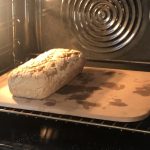
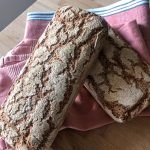
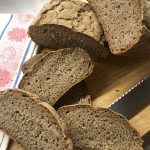
Remove the loaves from the pans, place them directly on the baking stone, reduce the oven temperature to 210°C (410°F), and continue baking for another 20 minutes. Allow the bread to cool completely on a wire rack. You’ll be rewarded with a beautifully crisp crust, a dense crumb with small, even air pockets, and an aroma that will fill your entire home.
I recommend slicing it thinly—it’s the best way to enjoy its wonderful flavor.
Adocchio Tips